
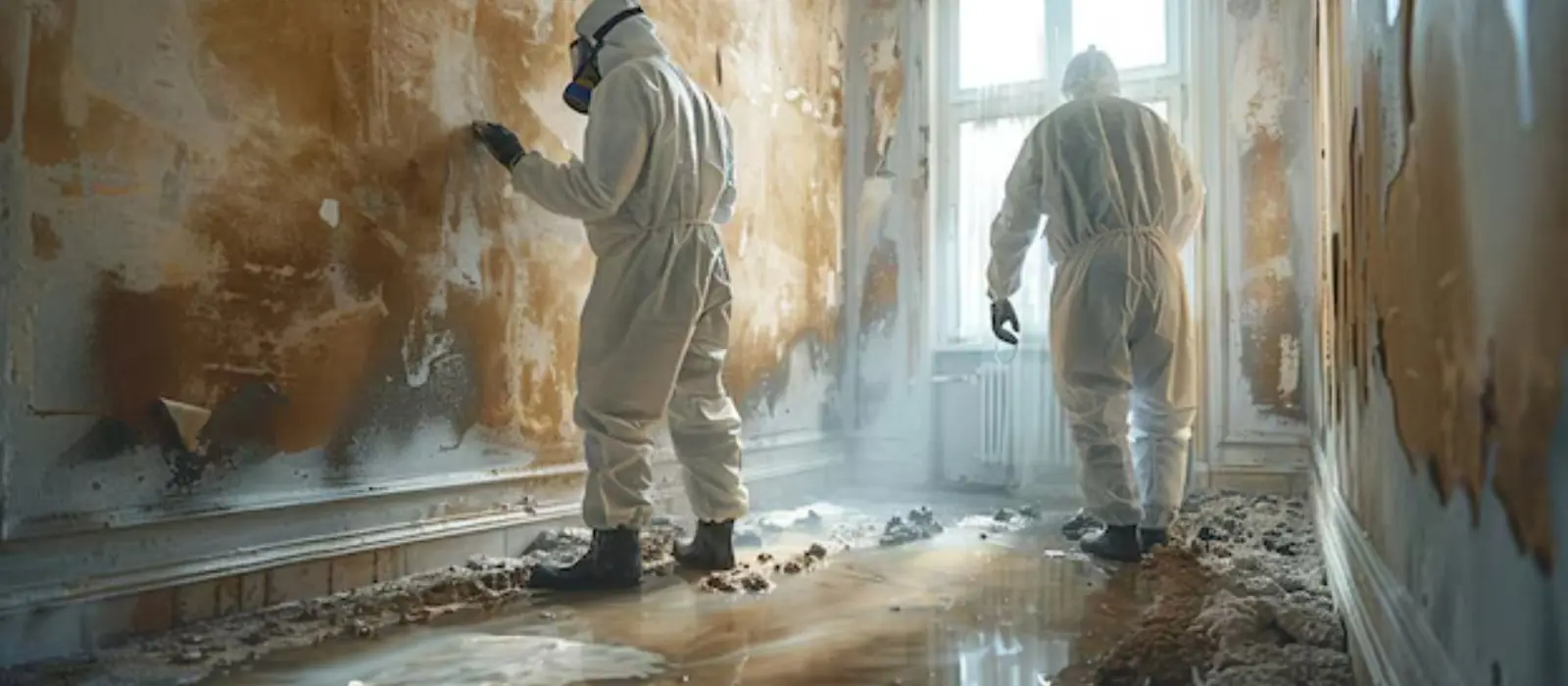
Treating mold in a lower level is a moisture project first and a cleaning project second. The EPA puts it plainly: the key to mold control is moisture control.
This plan assumes you have a lower-level room that smells damp or shows growth. It starts with measuring humidity, moves to drying and cleaning and ends with the signs that the job needs a crew. A separate guide covers getting rid of basement mold step by step.
Measure before you treat
A cheap hygrometer shows relative humidity. A moisture meter shows whether walls and wood are wet. Check at the same time of day for a few days, and check again after rain. Numbers beat guesses.
If humidity stays high or the meter reads wet, treat the moisture before the surface. If humidity is normal and a patch is small, you may be looking at an old stain or a one-time event.
The 24 to 48 hour rule
The EPA advises drying water-damaged areas and items within 24 to 48 hours to prevent mold growth. If water came into the room in the last two days, dry it now. Water mitigation describes how crews do this with air movers and dehumidifiers.
If it has been longer, look for growth, smell for mustiness and expect to remove some porous materials. Speed is the most useful thing you control.
A humidity-first plan
- Fix any leak or entry point, or have it fixed.
- Remove standing water and wet porous items.
- Run a dehumidifier with the door closed until readings drop.
- Clean small patches on hard surfaces with detergent and water.
- Discard soft materials that are moldy, such as carpet, cardboard and upholstery.
- Recheck humidity and surfaces over the next weeks.
What you can handle and what you cannot
| Situation | Reasonable to handle yourself | Call a crew |
|---|---|---|
| Small spot on concrete or tile | Yes, with gloves, goggles and a respirator | If it keeps returning |
| Spots on stored cardboard | Throw the cardboard out | If the shelves or walls are affected |
| Growth on drywall | No | Yes, removal with containment |
| Area larger than about 10 square feet | No | Yes |
| Water from sewage or flooding | No | Yes, treat as contaminated |
The EPA lists about 10 square feet as the rough limit for homeowner cleanup. Bleach is not recommended as a routine part of mold cleanup, according to the EPA.
When testing makes sense
Testing helps when you cannot find the source, want written proof or need results for a sale or a loan. It is not a substitute for finding and fixing the moisture. Ask whether a tester is independent of the crew that does the cleanup.
See flood damage restoration if the room flooded rather than slowly leaked.
Lower-level mold beyond a small patch?
Call the 24/7 line. Scope and price are explained before work starts.
Tools worth owning for a damp lower level
A hygrometer costs little and shows relative humidity at a glance. A pin or pinless moisture meter shows whether wood and drywall are wet. A dehumidifier with a continuous drain hose runs without emptying a tank, which makes it easier to keep going for days.
Add an N-95 respirator, goggles and gloves for cleanup, and plastic sheeting to protect floors. None of these replaces fixing the source, but together they let you tell a minor damp problem from one that needs a crew.
Track readings in a notebook for a week. A trend that climbs after rain points to a seepage or drainage problem rather than a humid day.
Pacific Palisades local note: bluffs and lower levels
Pacific Palisades runs from sea level to over 2,100 feet. Castellammare sits on small bluffs along Pacific Coast Highway near sea level, while Palisades Highlands in upper Santa Ynez Canyon rises to about 1,600 feet. A lower level on a bluff lot sees different moisture than one on a high slope.
Close to the shoreline, a lower level can stay damp after storms and may need dehumidification through wet months. Higher up, roof and window leaks matter more than ground moisture. See the Pacific Palisades page for coverage there.
In Venice, the low ground and the old canal and lagoon history make moisture control a regular chore for lower-level rooms.
Questions homeowners ask
Consistently high readings on a hygrometer, a musty smell or condensation on cold surfaces are the signs. Ask a crew to take moisture readings if you are unsure.
It controls humidity, which mold needs. It does not remove existing growth or fix a leak. Use it with source repair and cleaning or removal.
If you see growth or smell mustiness, yes, as with any lower-level room. Garages often have exposed concrete, which can usually be cleaned if growth is superficial.
Rules about habitability and repairs depend on the property and the circumstances. Ask the City of Santa Monica or your building manager about your situation.