
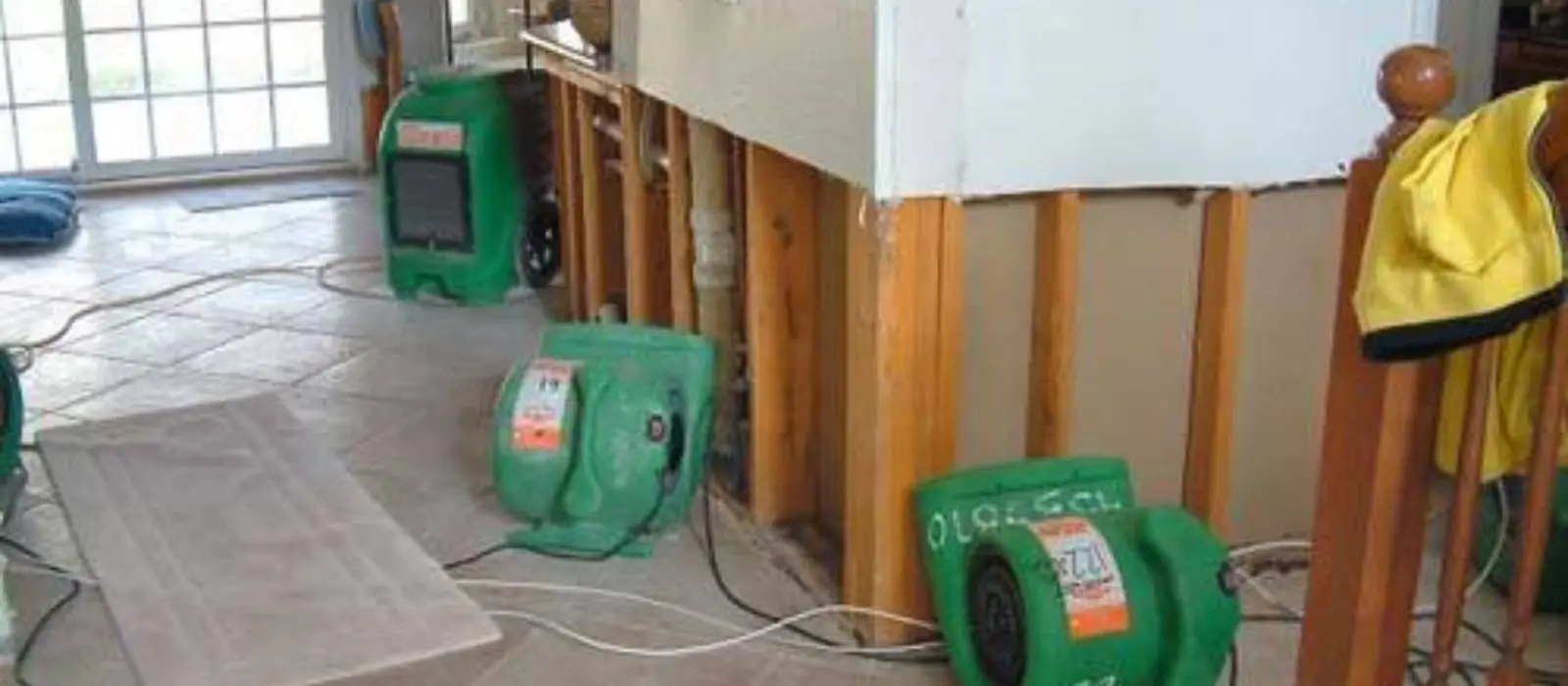
A damaged wall is rarely just a stain. Water that reached the wall usually soaked the drywall, the insulation and the framing behind it, and a repair that skips those layers fails within months.
This guide covers how a wall is assessed, when it is opened, how it is dried and how it is rebuilt. It applies to walls damaged by plumbing leaks, roof leaks, window leaks and appliance failures.
Signs of water inside a wall
Stains and bubbling paint
Brown or yellow marks and paint that bubbles or peels show moisture behind the surface.
Soft or swollen drywall
Drywall that feels spongy, bulges or crumbles has absorbed water.
Cold or damp spots
A wall that feels cooler or damper than its neighbors may be holding moisture.
Smell
A musty odor near a wall often points to wet materials in the cavity.
Find the source before the repair
A wall repaired before the leak is fixed will fail again. Trace the source. Common causes are a supply line or drain behind the wall, a window or flashing leak and a failed shower or tub surround.
A plumber or roofer fixes the source. The restoration crew handles the water that has already entered, starting with water mitigation if the cavity is still wet.
How the wall is checked and opened
- 1
Meter and image
A moisture meter and a thermal camera show how far the water traveled.
- 2
Open minimally
Baseboards come off, and small openings or holes let the crew see and reach the cavity.
- 3
Dry
Air movers and dehumidifiers dry the cavity, and readings are logged.
- 4
Remove what cannot be saved
Wet insulation and soft drywall are cut out past the damaged area.
Crews open only as much as needed. A wall that is damp but sound can often be dried through small openings without removing the whole panel.
How the wall is rebuilt
- Confirm the framing reads dry.
- Replace insulation.
- Hang new drywall and tape the seams.
- Apply texture to match the surrounding wall.
- Prime with a stain-blocking primer.
- Paint the whole wall edge to edge so the color matches.
Matching texture and paint takes care. A patch that is painted only at the repair often shows. Painting the whole wall to a corner is the usual way to hide the seam.
Patch or replace the panel
| Condition | Usual choice | Reason |
|---|---|---|
| Small stain, dry and sound drywall | Prime and paint | No structural damage |
| Localized soft spot | Cut out and patch | Remove only the wet section |
| Wide damage or sagging | Replace the panel | Patches would not hide the repair |
| Wet insulation | Replace it | Wet insulation holds moisture and loses its value |
The crew explains which choice fits your wall before work starts. A scope of work lists the wall, the materials and the finish.
Wall still wet or stained?
Call the 24/7 line. Scope and price are explained before work starts.
Painting a repaired wall so the patch disappears
Matching the finish is half the repair. After the drywall is hung, taped and textured, the wall gets a stain-blocking primer so old marks cannot bleed through. The finish coat then covers the wall corner to corner, because a patch of fresh paint on an aged wall often shows.
If new paint bubbles or a dark spot reappears within weeks, the cavity is probably still damp or the source is not fully fixed. Stop painting and have the wall rechecked. If the spots look like growth, read about mold remediation before you scrub.
Santa Monica local note: older buildings and permits
Pico is a historic neighborhood split by the Santa Monica Freeway (I-10). In older buildings, original plumbing and wall materials may still be in place, which can make a repair more involved than a simple patch.
Permit rules vary with the work, so ask the City of Santa Monica Building and Safety division whether your wall repair needs a permit. In Venice and Pacific Palisades, permits go through the Los Angeles Department of Building and Safety.
Ask any contractor to name who pulls the permit and to put it in writing. Work that needs a permit and skips it can complicate an insurance claim and a future sale.
Questions homeowners ask
A dry, sound wall with a stain can be primed and painted. If the wall is soft, damp or the stain returns, the cause is still active and the cavity needs checking before any finish goes on.
Crews match the texture with the same method used on the original, then prime and paint the whole wall edge to edge. Matching can take extra steps in older homes.
After the cavity reads dry and the source is fixed. Closing it earlier traps moisture and invites mold. The crew shows you the readings.
If the damage came from a sudden and accidental event, a policy may cover it in part or in full. Slow leaks are often excluded. Check your policy or ask your insurer.