
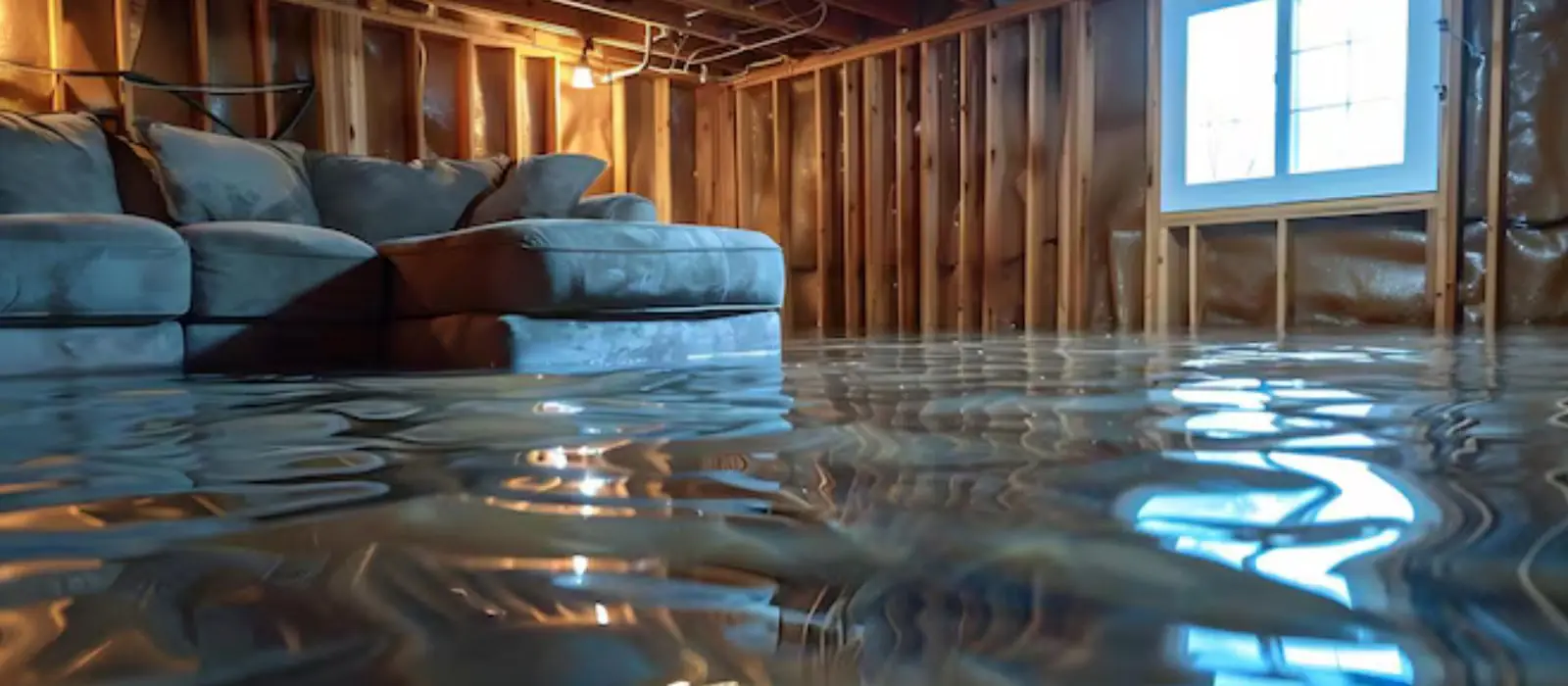
Water in a basement does not drain away on its own. Below-grade rooms sit lower than the soil and the sewer, so water that gets in tends to stay, soak the walls and wick up the framing.
This guide covers what to do in the first hour, how the water is removed and dried and how to tell a restoration problem from a drainage problem. It is written for Santa Monica, where plenty of homes have no basement at all but many have a below-grade garage, a lower-level unit or a storage room that behaves like one.
What counts as a basement in Santa Monica
A true basement is a full level below the ground. Many local buildings instead have a sunken garage under an apartment or condo, a half-level lower unit or a crawl space beneath a house. Water treats them all the same way. It flows to the lowest point and stays there.
If you live in a multi-unit building, the water may not be yours to fix. Tell the building manager right away, because the source may be a shared drain, a roof leak or a pipe serving several units.
How water gets into a lower level
Groundwater seepage
Soil saturated by heavy rain pushes water through slab cracks, joints and walls.
Drain or sewer backup
A blocked line pushes dirty water up through floor drains and tubs.
Storm runoff
Water running down a driveway or ramp enters a garage door or stairwell.
Plumbing failure
A supply line, water heater or washing machine hose floods the space from inside.
The first hour
- Stay out of the water if outlets, appliances or the panel are near it. Do not touch anything electrical while standing in water.
- Stop the source if you can. Close the main valve for a plumbing leak.
- Keep people and pets out if the water came from outside or from a drain.
- Move stored items up off the floor if it is safe to reach them.
- Photograph the water line and the damaged items before you move anything.
- Call the 24/7 line. Describe the depth, the source and what is in the room.
How the water is removed and the room is dried
Crews start with submersible pumps and extraction units. When the standing water is gone, wet carpet, pad, stored cardboard and soft drywall are removed. Moisture meters and a thermal camera map what is still wet in the walls and slab.
Air movers and dehumidifiers then run until readings reach the drying goal. Below-grade concrete holds moisture for a long time, so drying often takes longer than in an upper-floor room. Ask to see the readings before equipment is removed.
Which source means what
| Source | Water category | What it usually means for materials |
|---|---|---|
| Failed supply line or water heater | Category 1 at first | Many materials dry in place if caught early |
| Washing machine or dishwasher discharge | Category 2 | Carpet and pad are usually removed |
| Sewer or drain backup | Category 3 | Porous materials removed, areas sanitized |
| Storm runoff or groundwater | Category 2 or 3 | Contaminants from soil and street are assumed |
Restoration is not waterproofing
Restoration removes water and repairs the damage. Waterproofing stops water from entering, and it is a separate trade involving drainage, sealing and grading. If water keeps coming back after a storm, the long-term fix is a drainage or foundation contractor.
A restoration crew will tell you honestly when what you need is waterproofing. Get the space dry first. Waterproofing over wet walls traps the problem inside.
When mold becomes part of the problem
A basement that stays damp for several days invites mold, and below-grade rooms are slow to dry. Musty smells and dark spots on walls or boxes are signs. If you see them, read about mold remediation and fix the moisture first.
Drying early is the best way to prevent it. Water mitigation covers the drying stage in detail.
Water in a lower level now?
Call the 24/7 line. Dispatch will give safety steps while a crew is arranged.
Getting a lower level ready before the next storm
Most lower-level floods are easier to prevent than to clean. Move stored items onto shelves and off the floor, keep important papers upstairs and check that door sweeps and garage seals are intact. Clear leaves and debris from drains, ramps and stairwell grates before rain is forecast.
Know where the main water valve is and where the nearest floor drain sits. In a multi-unit building, ask the manager how the garage drains are maintained and who to call when they back up.
Low-lying coastal homes in Venice and bluff-side lower levels in Pacific Palisades face different risks than a downtown Santa Monica garage, but the preparation steps are the same. Photograph the room while it is dry. A before photo makes any later claim easier to support.
Santa Monica local note: flood maps and storm prep
To see whether your address sits in a mapped flood zone, check the FEMA flood map for your address. A standard homeowner policy usually excludes flood damage, so knowing your zone before a storm helps you decide whether separate flood coverage makes sense.
During a heavy storm in January 2005, all four Santa Monica fire stations handed out sandbags, according to the Santa Monica Daily Press. If a storm is forecast, ask the city about sandbag locations, and place them at garage ramps and doors before the rain, not after.
The same storm briefly flooded the McClure Tunnel where the I-10 meets Pacific Coast Highway. Roads can close fast when rain hits, so call the line early and do not drive through standing water to reach a flooded property.
Questions homeowners ask
The water behaves the same way, and the cleanup follows the same steps. The difference is who owns the space. In a multi-unit building, the manager or the association often controls the garage, so tell them immediately.
It varies with the amount of water, the materials and the concrete. Below-grade slabs hold moisture longer than upper floors, so drying often takes several days. The crew should show you the readings before removing equipment.
For a small clean spill, yes. For deeper water, contaminated water or anything near electrical power, call the line. Standing water and household electricity are a dangerous combination.
Yes if you have a below-grade garage, a sunken lower unit or a crawl space. Those spaces collect water the same way. If you have none of them, the first-hour steps still apply to a ground-floor flood.